Case · 06 / Go get'em
Go get'em
- Competitive intelligence
- AI tool
- SaaS
- Solo build · 8h
- Next.js
My role
Solo build — narrative, UX, visual, AI pipeline, deployment. 8 hours from blank repo to live URL. The constraint was a product design problem, not a dev one.
Outcome
A working AI competitor-analysis tool, shipped solo in 8 hours. Drops a URL → auto-identifies three rivals → returns scored design recommendations with real screenshots and exact copy diffs. Live URL — not a Figma file.
01
Overview
Most SaaS founders lose conversion to competitors but never know exactly why. Go get'em delivers the diagnosis: drop your URL, get a six-dimension design audit benchmarked against your top three competitors — with exact copy rewrites and screenshot evidence.
02
Process
Step 01 / 06
The process
Storyboarded the page as one continuous argument: you're losing but don't know why → manual comparison is broken → we show you exactly where → we tell you exactly what to fix → you act now. Every section and line of copy was made to ladder into that arc.
03
Shape
before
code
Shape before code
The page was a five-beat argument before it was a single component. Each section is one move in the arc — drawn as a wireframe first, so the structure carried the story and the code just dressed it.
Single-page scroll architecture · five beats
Swipe through the five beats →
04
Landing
page
Landing page
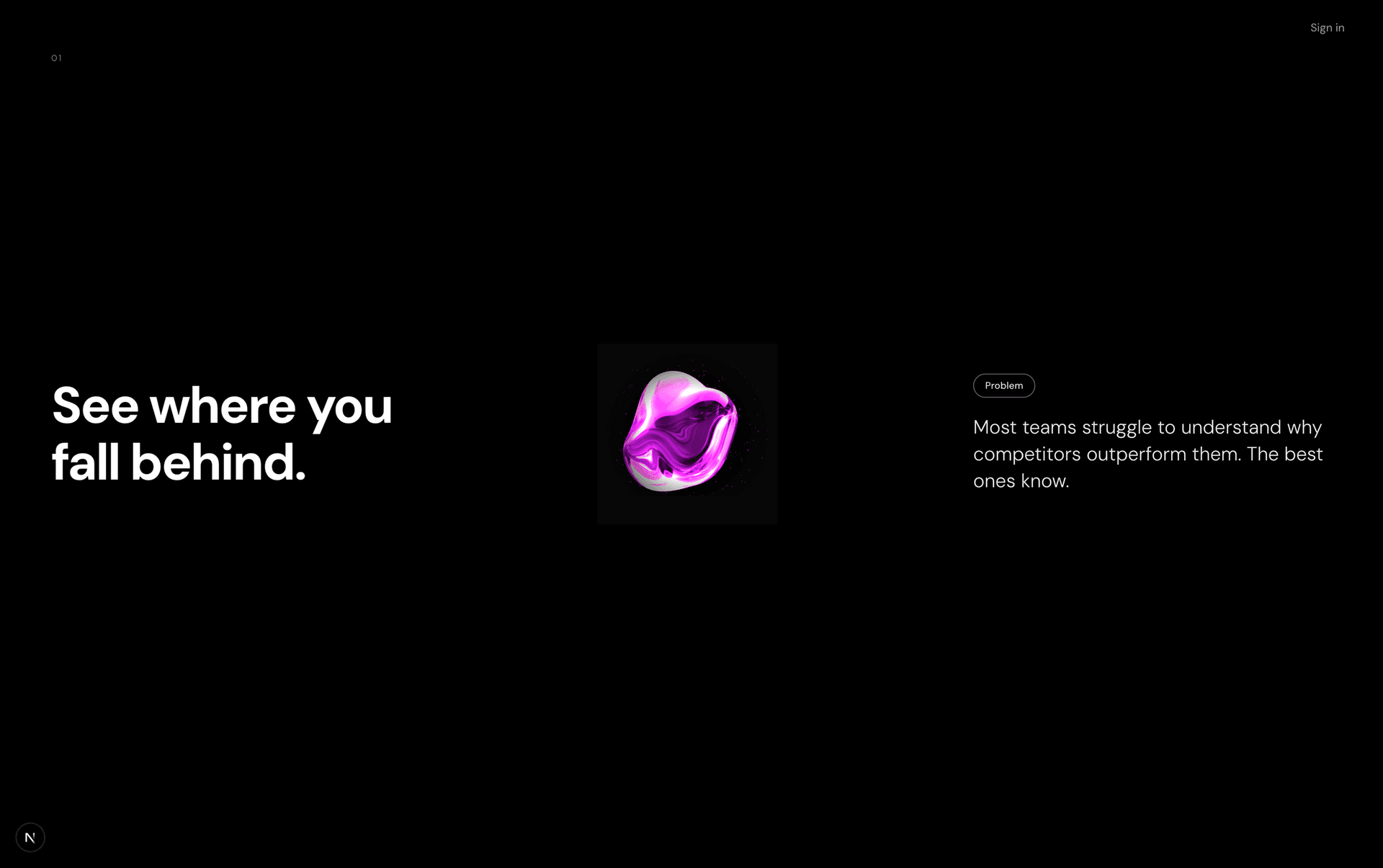
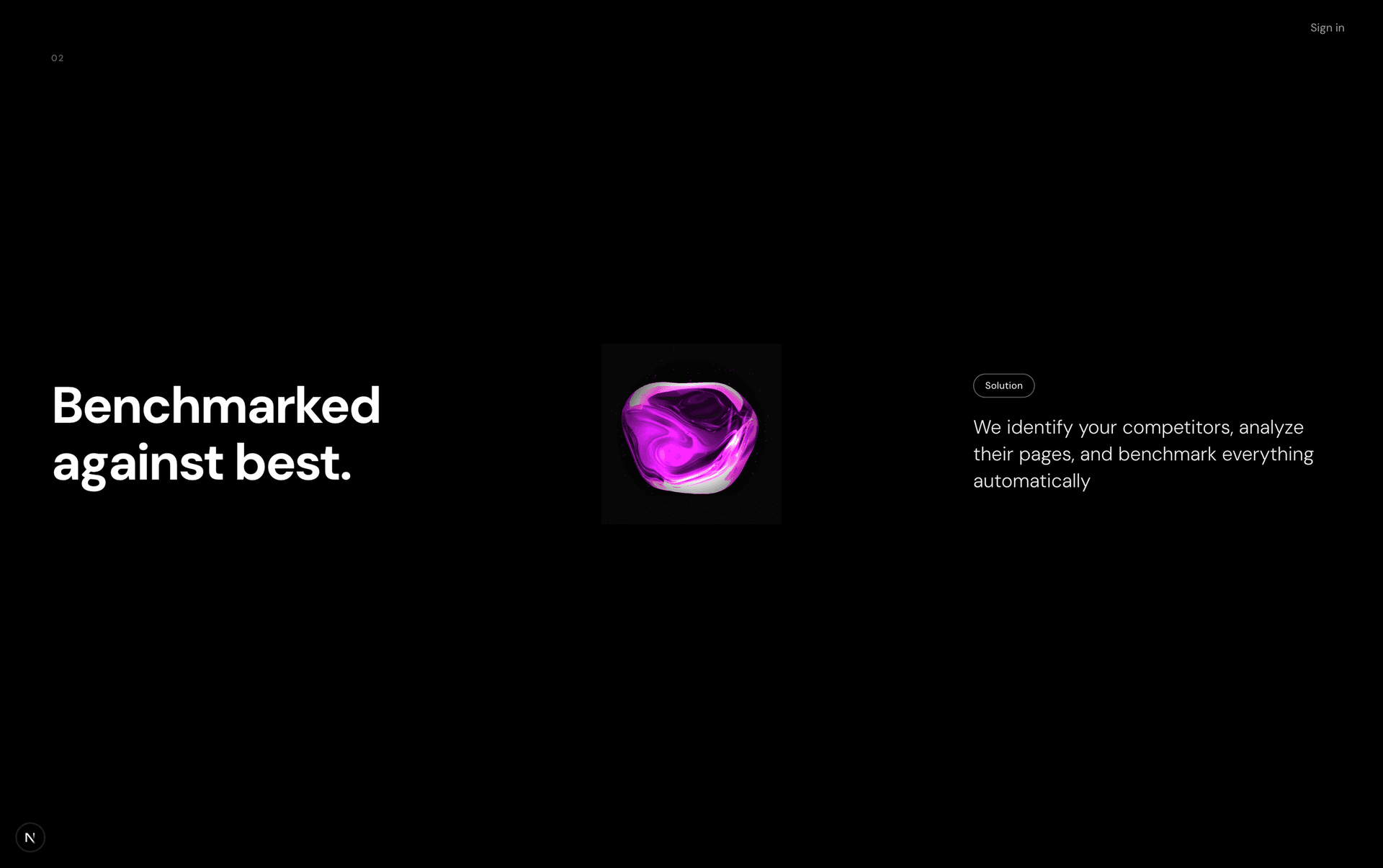
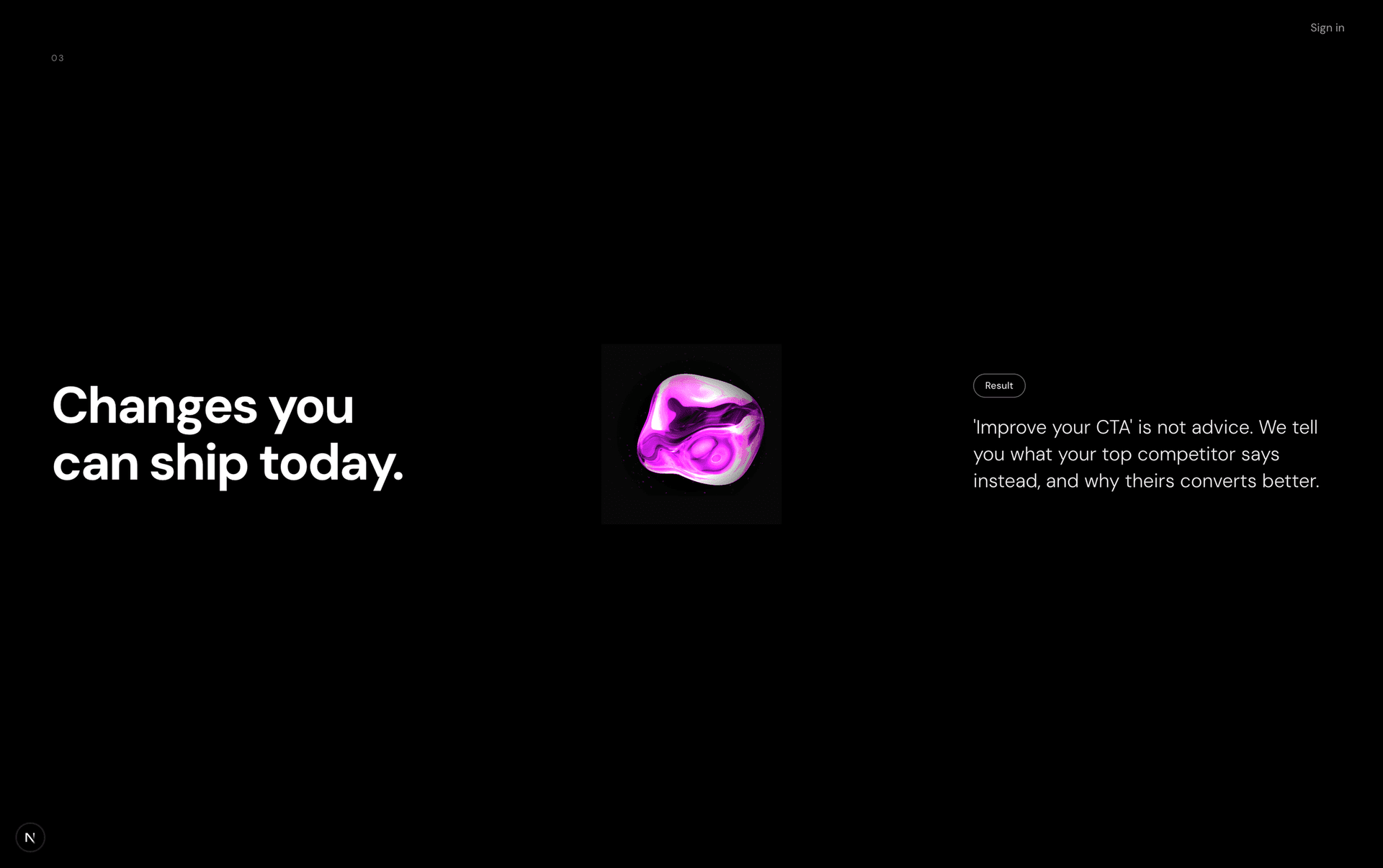
A cinematic dark scroll experience — a hero with a 3D blob and three editorial storytelling beats: Problem, Solution, Result. The whole page walks the visitor from "see where you fall behind" to "changes you can ship today" before they ever touch the tool.
05
URL
input
URL input
One field, one gesture. Drop a SaaS landing-page URL and the tool kicks off: Firecrawl scrapes the page, Claude identifies the top three direct competitors, and the vision pipeline benchmarks against them.
06
Analysis
results
Analysis results
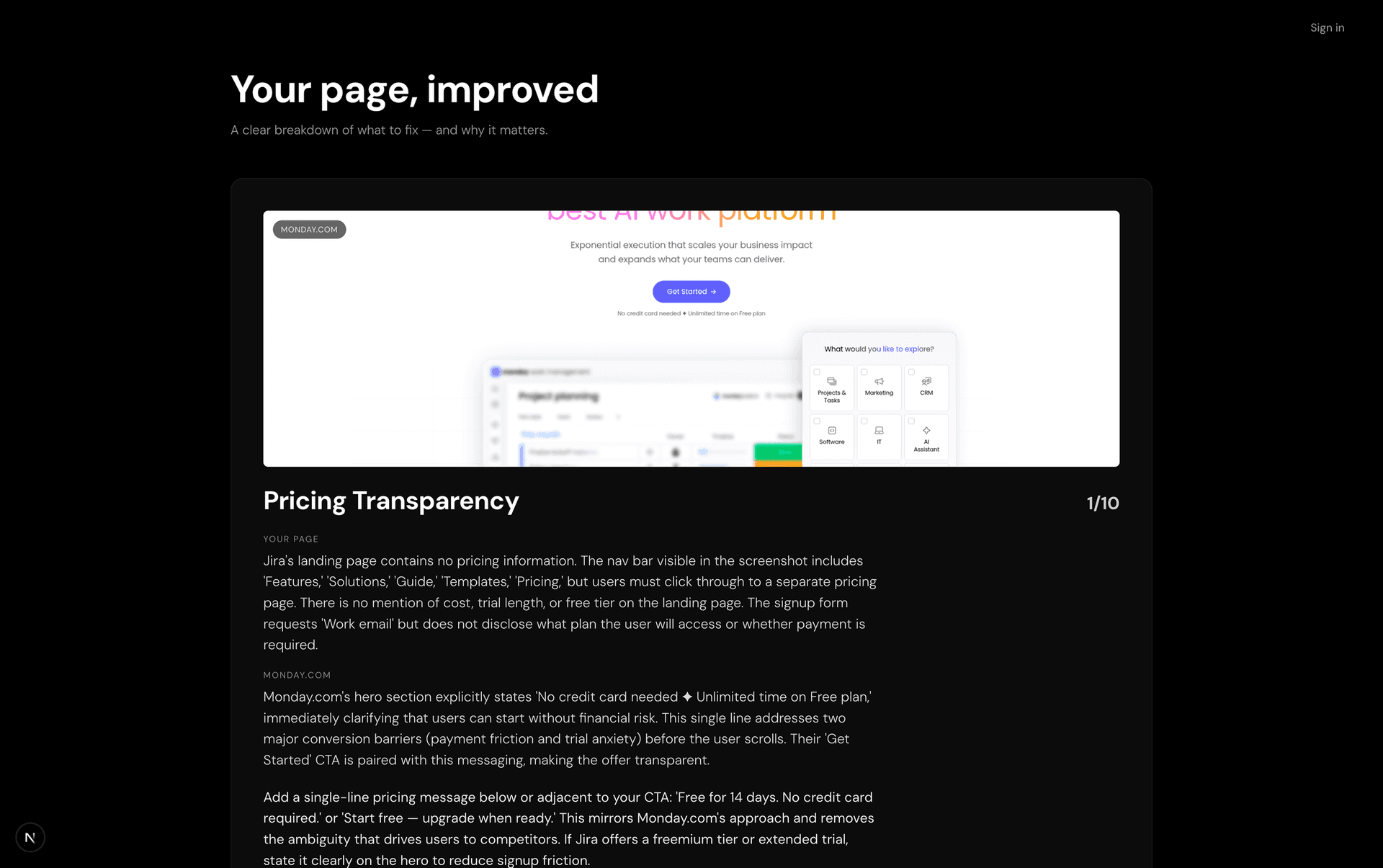
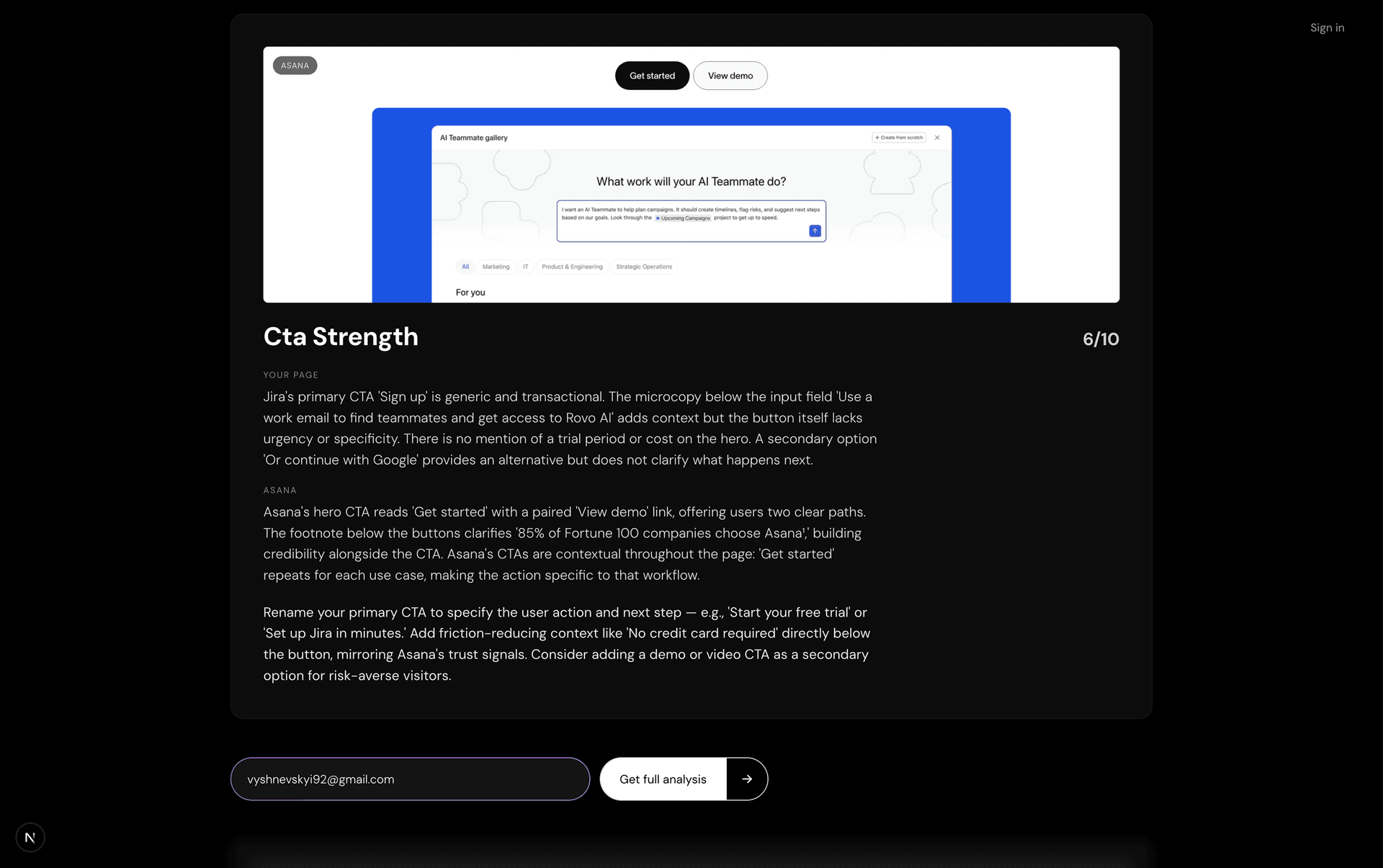
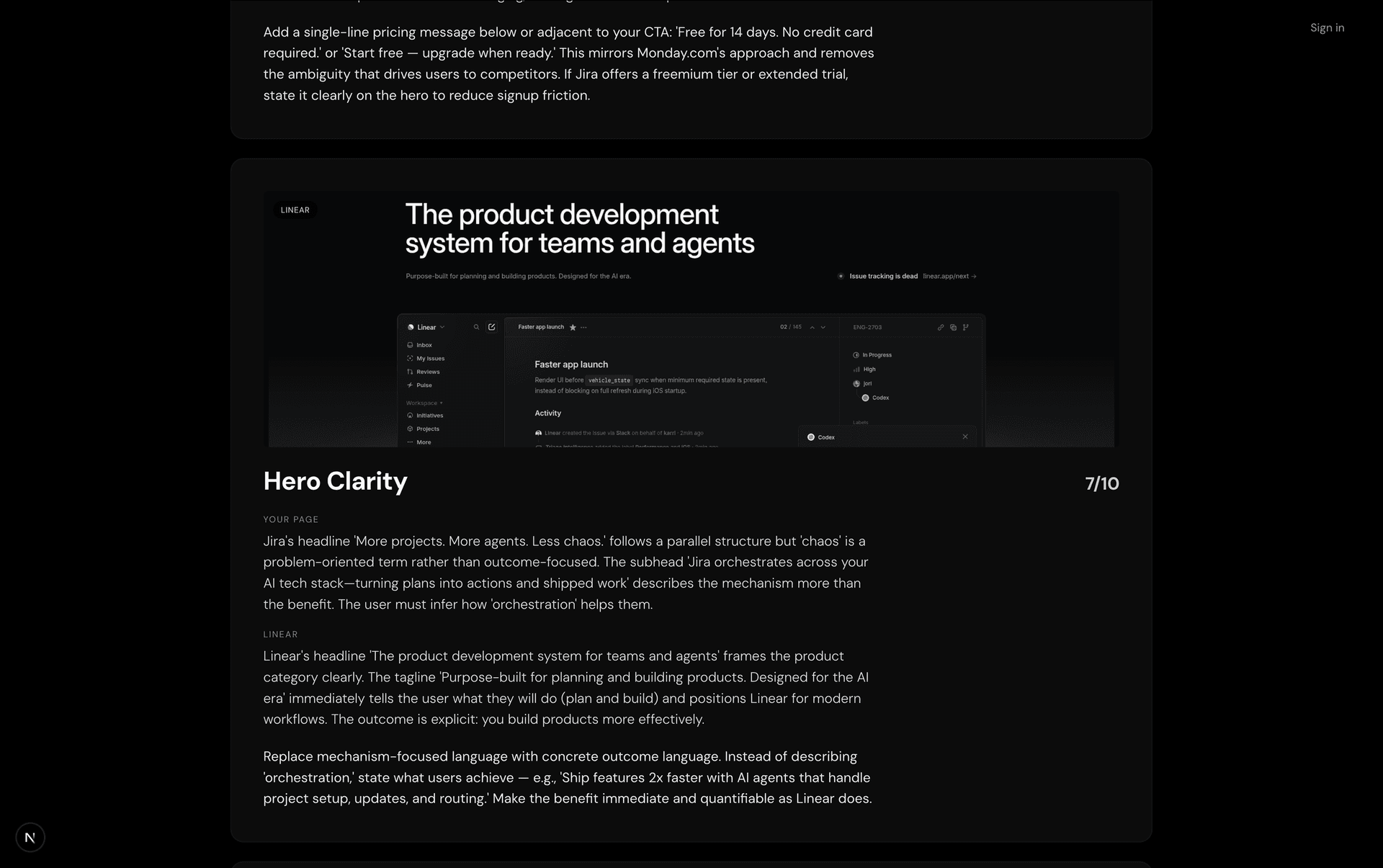
Claude Sonnet 4.5 vision scores the page across six dimensions, 1–10, each backed by specific evidence and a concrete rewrite. Real output for Jira: 1/10 on Pricing Transparency (no pricing anywhere on the page), 6/10 on CTA Strength (generic "Sign up" vs Asana's "Get started · View demo"), 7/10 on Hero Clarity vs Linear's sharper positioning.
07
The
full
report
The full report
The first analysis is free — the full multi-page report sits behind a soft gate. "Don't stop at one page": drop your email for the complete breakdown, or subscribe for unlimited analyses. Mock Stripe stayed mock; the paywall was a scoping decision, not a build-out.
—
Final
thoughts
Final thoughts
The product was defined before it was built. Flows, positioning, monetization, and tech direction were locked upfront — so AI could generate 95%+ of the code while every product decision stayed human.
The lesson is focus, not speed. Every feature was tested against one question: does it make the core experience better? Everything else got cut.
AI handles execution. Humans hold the calls.
Next case